


This article was originally published by Turi Grasso on the Surysur website. Read the original here: [URL].
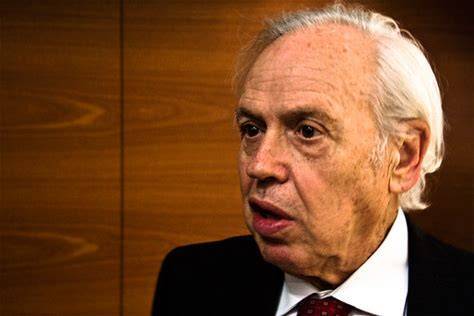
We present a voice that, for decades, has unsettled, questioned, and disrupted comfortable equilibrium. Roberto Savio is not just a journalist. He is one of those who have consciously chosen to position themselves on the “wrong” side of the dominant narrative: the side of those who have no voice.
We present a voice that, for decades, has unsettled, questioned, and disrupted comfortable equilibrium. Roberto Savio is not just a journalist. He is one of those who have consciously chosen to position themselves on the “wrong” side of the dominant narrative: the side of those who have no voice.
Savio realiza un acto político en el sentido más alto del término: desplazar el punto de vista, dar espacio a aquello que el sistema tiende a ignorar, cuando no a borrar. Y esto siempre tiene un precio. Su historia está atravesada por encuentros que no son simples anécdotas, sino verdaderos puntos de inflexión de la historia contemporánea.
One night in Cuba, he came face to face with Che Guevara: not a poster boy, but a real man with whom he could converse without rhetoric. This encounter, now well-known, left a profound and positive mark on his journalistic work. Years later, he worked with Mikhail Gorbachev in the now almost forgotten attempt to build an international order based on dialogue, not constant confrontation.
One night in Cuba, he came face to face with Che Guevara: not a poster boy, but a real man with whom he could converse without rhetoric. This encounter, now well-known, left a profound and positive mark on his journalistic work. Years later, he worked with Mikhail Gorbachev in the now almost forgotten attempt to build an international order based on dialogue, not constant confrontation.
One night in Cuba, he came face to face with Che Guevara: not a poster boy, but a real man with whom he could converse without rhetoric. This encounter, now well-known, left a profound and positive mark on his journalistic work. Years later, he worked with Mikhail Gorbachev in the now almost forgotten attempt to build an international order based on dialogue, not constant confrontation.
Interview
– We live in a fragmented, polarized world, often incapable of listening to one another. In this scenario, how can civil society today rediscover a common voice and build a credible alternative to the dominant ideology?
—First of all, I would like to say, for those who know Turi Grasso, that he has been very generous and has given me a truly exceptional introduction. I am simply an activist, nothing more. I have worked at the United Nations, internationally, in about thirty countries, and I have visited 106. I have accumulated a wealth of lived experience. What surprises me, however, is how much we tend to overcomplicate things that are, in reality, very simple.
Almost all of you have lived in an apartment building. It only takes one arrogant and quarrelsome person to shatter the peace of the building. It doesn’t take much to break down dialogue: all it takes is someone with the arrogance to do so. Today we live in a world where the arrogance of power has created a similar situation: in this “global building,” with its 186 member countries, two or three behave with extreme arrogance. This has produced a profound upheaval: the crisis of international law.
And this is no small matter, because without international law we no longer know how to regulate relations between states. We have lost not only rules, but also a common vision, an architecture of shared values. To give a simple example: today the word “peace” has become, for some, a partisan term. Even the issue of climate change is interpreted through an ideological lens.
But how can climate change be “left-wing” or “right-wing”? How can the planet have a political orientation? It’s clear that we’re facing a manipulation of reality linked to power dynamics we all know.
But the fact that Milei, after becoming president of Argentina, eliminated all environmental laws, and that Kast, after becoming president of Chile, canceled 57 environmental laws in a single day, are very clear signs: there is a strong, powerful logic that guides these decisions.
We too have regressed regarding the environmental deadlines set by the European Union in the 2030 Agenda: several targets have in fact been postponed. This is because, for example, the German defense industry is not in favor of rapid restrictions on emissions, and therefore these targets will tend to be achieved more gradually. In short, there are several reasons why the environmental issue is currently at a standstill.
And yet, it is clear that humankind cannot live without a constructive vision of its relationship with the environment. This is also demonstrated by ongoing crises and conflicts: many countries are increasing their use of alternative energies. China, for example, is working at an accelerated pace to reduce its dependence on gas and oil. And if we look at the Gulf countries, we see that they are all discussing how to build mechanisms to lessen their energy dependence.
The tension in the Strait of Hormuz has made everyone realize that, without a survival strategy, the system we live in risks collapsing.
According to the International Energy Agency, Europe could find itself without enough fuel for air transport in just a few months.
When I had to book a flight for June, a friend at a travel agency told me, “Take the morning flight, because if flights have to be canceled, they’ll probably be the afternoon ones.”
We have reached a point where not only peace is at stake, but the very logic of humanity, which is a social logic. Human beings are social animals, more so than others, and it is precisely this characteristic—along with language and other tools—that has allowed them to become what they are. Today, however, we face a very simple choice.
The political system is paralyzed: polarization and divisions have led to a radical fracture. Centrist governments have disappeared; there are now right-wing or left-wing governments, and increasingly, far-right governments or those supported by far-left forces. In this situation, destined to last for some time, the only possibility is for civil society—which has already mobilized around climate action—to take a firm stand and forcefully demand policies aimed at the survival of humanity.
There is another issue worth addressing, even if only briefly: artificial intelligence. As it is developing, it risks undermining democracy and human cooperation because it pushes toward strong individualism and the creation of closed “bubbles” within which we operate. In these bubbles, the idea of shared values and cooperation tends to disappear profoundly. And there is one final point: human beings are perhaps the only animals that do not learn. We continue to fall into two traps we thought we had overcome: the name of God and the name of the nation. How many millions have died throughout history in the name of God and the nation? And yet, today we are returning to precisely those same logics.
If we, the citizens, cannot become aware of this situation, recognize its absurdity and lack of logic, it will be difficult to explain it rationally. If someone arrived from Mars and asked us what was happening, we wouldn’t be able to answer logically, because rationality seems to have gone astray. That’s why we must make an effort: to recover awareness, critical thinking… and also the ability to question ourselves.
The environmental drama
– Many people are already talking about the environment as a true emergency, but few see it as a historic opportunity. In your opinion, can environmental protection become not only a driver of growth, but also a lever for geopolitical balance and peace among nations?
“I don’t think there’s any other choice. We can continue ignoring the drama of climate change, we can continue, no problem. We’ve been doing it for a long time, and we have all the data to know that we’re facing a serious and real problem.
Nothing is happening in the United States. Eighty-three percent of American citizens believe that the environment is a fundamental issue, and we have a government that does the exact opposite. It’s a government that is bringing back coal and fossil fuels, that is acting against the fight against climate change. The U.S. government paid a billion dollars to Total, the French company that was supposed to build a wind farm in the Gulf of Mexico, to prevent it from doing so. They paid a billion dollars just to stop the wind farm. These are ideological decisions, not logical ones. And one can even ideologically agree with a world in which ‘the market’ earns $30,000 a minute and boasts of never having paid a cent in taxes.”
A world where $40 trillion is frozen in tax havens. A world where 0.003% of humanity owns 50% of the world’s gross domestic product. A world where global debt has reached $108 trillion, while global GDP is $110 trillion.
In a year, global GDP will be less than what we spend. And you know that, in a family, if one person spends more than they earn, it’s not a sustainable situation. So, in this unsustainable world, what’s the only solution? It’s to see how we can turn this crisis into a positive opportunity.
Los chinos dan a la palabra «crisis» un sentido ambivalente, porque crisis significa también apertura de oportunidades. Hay un estudio de la OSCE, la mayor organización regional de seguridad del mundo, que dice que por cada dólar invertido en intervenciones positivas sobre el cambio climático hay tres dólares de ahorro en costes y problemas. A estas alturas tenemos todos los datos, las cifras, las estadísticas, etcétera. Pero el problema es que no se hace, porque evidentemente el marco político está atrapado entre el mundo de los lobbies de la industria fósil y el de la inteligencia artificial, que ya ha superado al mundo industrial y se ha convertido en el nuevo centro de la economía.
And consider that IBM, in 1960, had 400,000 employees and a certain balance sheet. Nvidia, the company that produces microchips today, has around 60,000 employees and a balance sheet twenty times larger than IBM’s. Because the economy is changing, the industry is changing: we are in a time of transition. In this transition, either we find a way to use the crisis in positive terms, or it will be a crisis that leads us all down a hopeless path.
Final reflection
– Roberto, listening to you is almost chilling, because it’s clear you’ve only said a fraction of what you wanted to express, and this is deeply worrying, especially in light of the reflections we’ve shared. I’d like to ask you for a final, closing thought. If you had to leave a message for our listeners—an essential message, a key to understanding our times, which seem marked by increasing dehumanization—what advice would you give to young people, to all of us, and to political leaders in general?
– Voy a menudo a hablar en escuelas y universidades, y lo que me sorprende es cuánto la sociedad ignora a los jóvenes. De hecho, existe una brecha generacional, por la cual los jóvenes se han convertido ya en una categoría autosuficiente, autorreferencial, que en realidad no tiene ningún intercambio de contactos ni de ideas con las otras generaciones. Y esto es típico del mundo en el que estamos, en el que la gente ha dejado de creer en las esperanzas que teníamos en los años posteriores a la segunda guerra mundial. Esperanzas que, en los años ochenta, comenzaron a derrumbarse con el llamado «Consenso de Washington», es decir, la fórmula con la que el Banco Mundial, el Fondo Monetario y el sistema bancario estadounidense reestructuraron la economía mundial.
They said: what works is what produces; what doesn’t produce isn’t important. So, for example, education produces, but not in the short term; healthcare produces, but not in the short term; finance, on the other hand, produces in the short term. And so we began to create a world in which importance is given to what represents production. The result is that for the last fifty years we have been cutting back on healthcare and education.
In this world, where the logic is increasingly that of the market and not that of the human being, the center of the subject is the market, not the person.
And we must begin to reflect on why young people don’t feel part of this society.
Y, sin ir muy lejos, en Italia un gobierno —y no de derechas— hace unos 14 años gastó 20.000 millones de dólares para salvar a cuatro bancos. En ese mismo año, el total de las sumas presupuestadas para los jóvenes fue de mil millones.
Y si ustedes fueran jóvenes, una sociedad que gasta 20.000 millones en los bancos y mil millones en ellos crea una situación en la que hoy los jóvenes se sienten completamente inseguros. Ya no votan, porque no se sienten parte del sistema. Y la inteligencia artificial aumentará este drama, porque nos sitúa ante un sistema horizontal que, sin embargo, nos encierra en burbujas verticales.
You put the “greens” with those who think green, you put the “reds” with those who think red. Then I enter a bubble where I find myself with people who think like me, I’m happy and at peace; but if I leave the bubble and encounter someone who thinks differently, I see them as an enemy, not as a person who thinks differently.
Tolerance and solidarity are terms that have disappeared from the debate; you no longer hear about them. You no longer hear about social justice, nor about the idea of cooperation. The idea of the difference between growth, which is about quantity, and development, which is about the quality of a person, has also disappeared.
We’ve entered a world where all values are disappearing. Values are now those of the stock market. So I put myself in the shoes of young people and see them entering a world where a child born in Italy today is born with €40,360 in debt. If I were a child, I wouldn’t be so happy to be born into a world where debt is destined to increase, because it will continue to increase and no one will be able to pay it off.
-So what’s the logic?
The logic is that a society cannot live until it finds instruments of cooperation and dialogue, especially today, in a world where everything is possible globally because technology allows it; a world where important borders no longer exist, where true linguistic barriers no longer exist, a world where homogenization is so accelerated. In this world, either we rediscover terms of dialogue and cooperation so that we can talk to each other, or we will be condemned to a situation of permanent conflict, in which humanity will face very serious problems.
Therefore, my message is this: What matters today is not losing the capacity for outrage. People who lose the capacity for outrage and remain indifferent to everything are no longer useful social beings. And people should be outraged; whether they are right-wing or left-wing doesn’t matter, but people should participate, people should be outraged, people should feel that they are part of a society and feel that they can contribute, in their own small way, to everyday relationships.
Peace, as Gandhi said, is built on personal relationships. It’s a cultural issue, a way of seeing life; it’s not a technical matter: it’s a cultural one. We must rediscover the culture of peace among ourselves. This is the message I would give.
– Roberto, thank you for your message and your contribution. Thank you also for bringing a branch of the United Nations University for Peace dedicated to artificial intelligence to Italy.
* A graduate in engineering, he has combined his professional commitment with social action, promoting initiatives and projects through international service associations to contribute to the peace process in the Mediterranean area and to the recognition of human rights, particularly the rights of women and children.
This article was originally published by Turi Grasso on the Surysur website. Read the original here: [URL].